How Many Articles Before Affiliate Links? A Beginner’s Guide
Table of Contents
Articles before affiliate links is one of those questions that keeps coming up because beginners want a number they can follow. That is understandable. A clear number feels safe. The problem is that there is no universal magic number that works for every site, every niche, and every audience.
A better question is this: does your site already have enough useful content for a reader to understand what it is about, trust the tone, and see that the recommendation fits naturally? If the answer is no, then adding links too early usually makes the site feel thin.
If you are still getting your bearings, start with the basics in Affiliate Marketing for Beginners. It gives the wider context before you worry about where affiliate links should go.
Quick Answer
There is no fixed rule for articles before affiliate links, but most beginners should publish several useful, relevant articles before adding affiliate recommendations. In many cases, five to ten solid pieces is a more sensible starting point than trying to monetise the first page you publish.
Why there is no perfect number
A site with three detailed, genuinely useful articles can look more trustworthy than a site with fifteen thin ones. That is why chasing a number can be misleading.
What matters is not whether you have hit seven posts or ten posts. What matters is whether the content already gives a visitor enough confidence to stay, read, and understand the purpose of the site. If the site still looks empty, underdeveloped, or confused, the affiliate links will feel premature.
Google’s guidance on creating helpful, reliable, people-first content points in the same direction. Content should exist to help readers first, not just to carry monetisation.
What articles before affiliate links should really achieve
Articles before affiliate links should do three jobs.
First, they should make the site’s topic clear.
Second, they should show the reader that the content is there to help, not just to sell.
Third, they should create enough context for later recommendations to make sense.
That last point matters. If you publish a product recommendation before you have explained the problem it solves, the recommendation looks weak. If you already have useful beginner content in place, the same recommendation can feel natural.
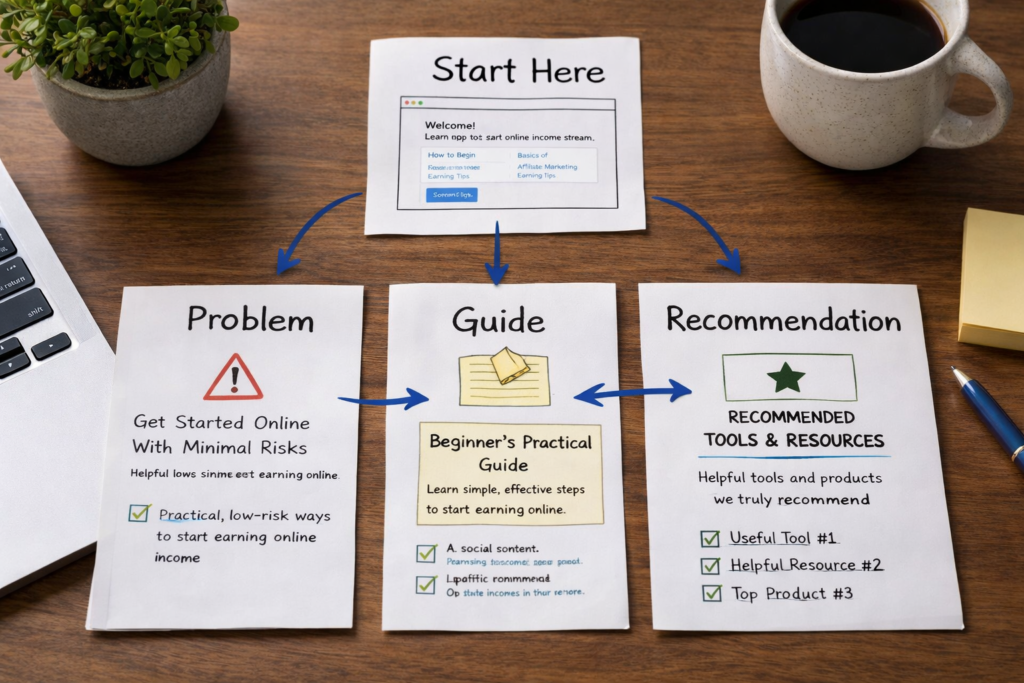
This is one reason the Start Here page matters on a site like yours. It gives readers orientation instead of dropping them straight into a monetised page.
What beginners often get wrong
A common mistake is trying to make the first article do everything. It tries to introduce the topic, build authority, explain the business model, recommend a product, and make money all at once. That usually makes the page clumsy.
Another mistake is filling the early site with weak list posts just to hit an article count. That may help the site look busier, but it does not create trust.
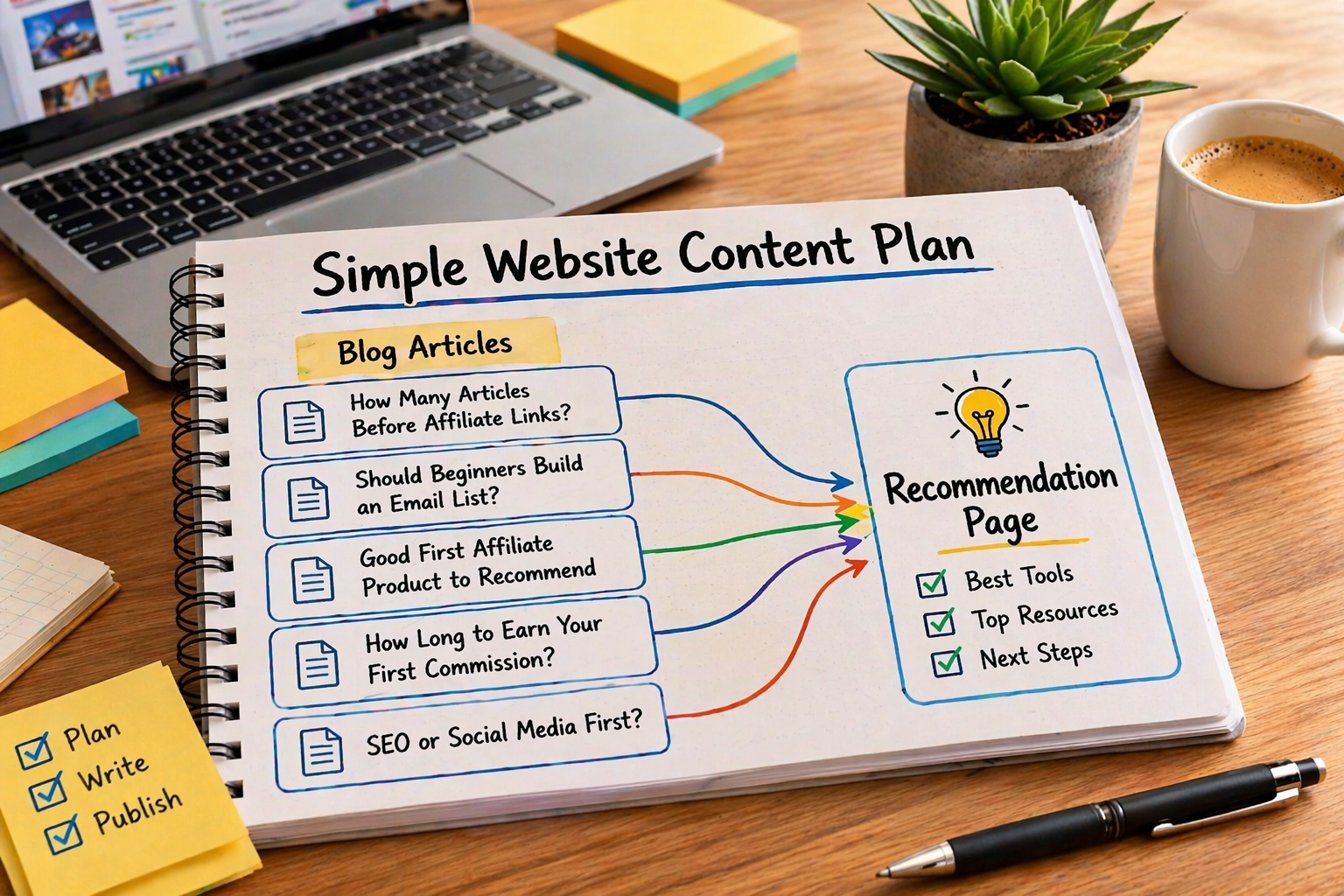
A better approach is to publish a small cluster of useful articles first. For example, one article can explain the beginner problem, another can answer a common objection, another can compare options honestly, and only then does a recommendation page start to feel properly supported.
A sensible way to decide when you are ready
Instead of asking for a number, ask these questions:
- Can a new visitor tell what the site is about within a minute?
- Are there several useful pages that answer real beginner questions?
- Would the recommendation still make sense if there were no commission attached?
- Does the site look like it is trying to help, not just cash in?
If the answers are yes, you are probably closer to ready.
The Federal Trade Commission also makes clear that endorsements and recommendations should be honest and not misleading in its Endorsement Guides FAQ. That matters because adding links too early often tempts beginners to force recommendations before they have built enough context.
Why trust matters more than speed
Many beginners are in a rush because they want proof that the site can earn. That is understandable, but speed can work against you. A rushed site often looks like it was created for links first and readers second.
That is the wrong order.
A calmer approach is more useful. Build a small base of content that answers real questions, then add recommendations where they genuinely fit. That is far more likely to help someone than throwing affiliate links into every early article.
If your bigger aim is a realistic second income, this also fits the slower, steadier thinking in Can You Really Build a Second Income in Your Spare Time?.
A practical benchmark for beginners
If you want a practical benchmark, five to ten useful articles is a sensible range for many beginner sites. That is not a rule. It is a sanity check.
By that point, a reader should be able to see a clear topic, read several helpful pieces, and understand why a recommendation belongs on the site. If the site still feels empty after that, the problem is probably not the number. It is the quality or the focus.
Conclusion
So, how many articles before affiliate links should a beginner publish?
There is no magic number, but there should be enough useful content in place that your recommendations feel supported, relevant, and honest. For most beginners, that means building a small body of genuinely helpful content before trying to monetise everything.
That is less exciting than chasing instant earnings, but it is usually the better foundation.
FAQ
How many articles before affiliate links is the right number?
There is no fixed number, but many beginners are better off with five to ten useful articles before they start adding affiliate recommendations.
Can I add affiliate links in my first article?
You can, but that does not always mean you should. If the site still feels thin or unclear, the links may look premature and weak.
Do articles before affiliate links need to be long?
Not necessarily. They need to be useful, relevant, and clear. A smaller number of strong articles is usually better than lots of thin ones.
About the Author

Richard Chambers writes Simple Income Guide to help beginners understand online income in a clear, realistic, and pressure-free way. The focus is on simple explanations, honest expectations, and practical guidance for people who want to make sense of online business models without hype.
Read more on the About page.