What Free Tools Do Beginners Actually Need for Affiliate Marketing?
Table of Contents
The phrase “free tools” tends to attract rubbish. Search around long enough and you will find giant lists full of platforms you do not need, dashboards you will not understand, and software that only becomes useful when your site is already far beyond beginner level.
For most people starting out, the real question is simpler: what will genuinely help me write, publish, organise, and learn? On a site built around calm beginner guidance, like Simple Income Guide, the best answer is nearly always a small, workable setup rather than a shiny pile of apps.
Quick Answer
The best free tools for affiliate marketing are usually basic publishing, writing, planning, and tracking tools. Most beginners do not need a large software stack. They need enough to get useful content live and understand what is happening afterward.
What matters first
At the beginning, the core jobs are simple. You need somewhere to publish. You need a way to draft and organise ideas. You may need a basic image solution for blog posts. And once the site is live, you need a way to see whether pages are being discovered.
That is why a publishing platform such as WordPress is often enough to begin with. It gives you pages, posts, menus, and flexibility without demanding a huge upfront investment. Beyond that, a notebook, a plain document editor, and a calm workflow often do more good than a long subscription list.
Free tools for affiliate marketing that actually help
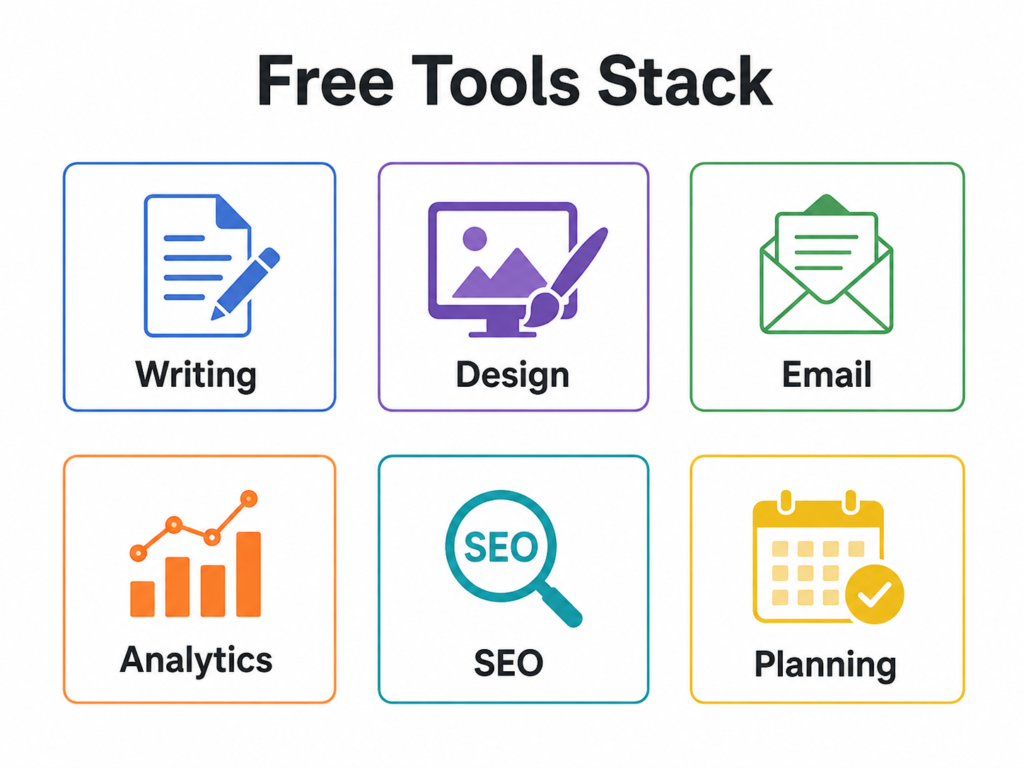
A sensible beginner stack usually includes a site platform, a writing tool, a simple planning method, and one way to track visibility. That might be all you need for quite a while.
Once your site is live, Google Search Console becomes useful because it helps you see whether Google is discovering and indexing your pages. That is much more valuable than staring at empty analytics dashboards you do not yet know how to interpret.
For the writing side, your own internal structure matters more than software. Articles like Start Here, Affiliate Marketing for Beginners, and Build a Second Income in Your Spare Time work because they answer real questions clearly. Tools should support that. They should not become the centre of your attention.
What can wait
A lot can wait. Full email automation, premium design stacks, expensive SEO suites, and complicated planning systems are rarely urgent at the beginning. They can be useful later, but that does not make them essential now.
Beginners often lose momentum because they spend too long constructing a toolkit instead of building a site. That usually feels productive at the time. In practice, it delays the part that matters: useful content.
A simple way to judge any tool
Before adding anything, ask one blunt question: what problem does this solve right now? If the answer is vague, it probably belongs on the “later” list.
Google’s own documentation for Search Console is useful because it shows what a practical tool looks like. It is tied to a real task. The same principle should apply to every tool in your setup.
Conclusion
The best free tools for affiliate marketing are the ones that help you publish, stay organised, and understand early search visibility without turning the whole project into a software hobby. That usually means fewer tools than people expect. A small, stable setup is easier to sustain, easier to understand, and far more likely to keep moving.
FAQ
Do I need paid tools to start affiliate marketing?
No. Many beginners can start with free publishing, writing, planning, and search-tracking tools.
Is Google Search Console worth using early?
Yes. It can show whether pages are being discovered and indexed, which is genuinely useful for a new site.
What is the biggest tool mistake beginners make?
They build a complicated stack before they have built enough content to justify it.
About the Author

Richard Chambers writes this guide to help with online business for beginners and other simple income models. Simple Income Guide helps beginners understand online business in a clear, realistic, and pressure-free way. The focus is on simple explanations, honest expectations, and practical guidance for people who want to make sense of online business models without hype.
Read more on the About page.