Affiliate Disclosure for Beginners: Why Honesty Matters
Table of Contents
Affiliate disclosure for beginners sounds dull, which is probably why so many people treat it like an afterthought. They focus on links, recommendations, and content ideas, but the simple job of telling readers they may earn a commission gets pushed to one side.
That is a mistake.
If you are still new to the whole model, read this affiliate marketing for beginners guide first. It gives the wider context for why trust matters so much in the first place.
Quick Answer
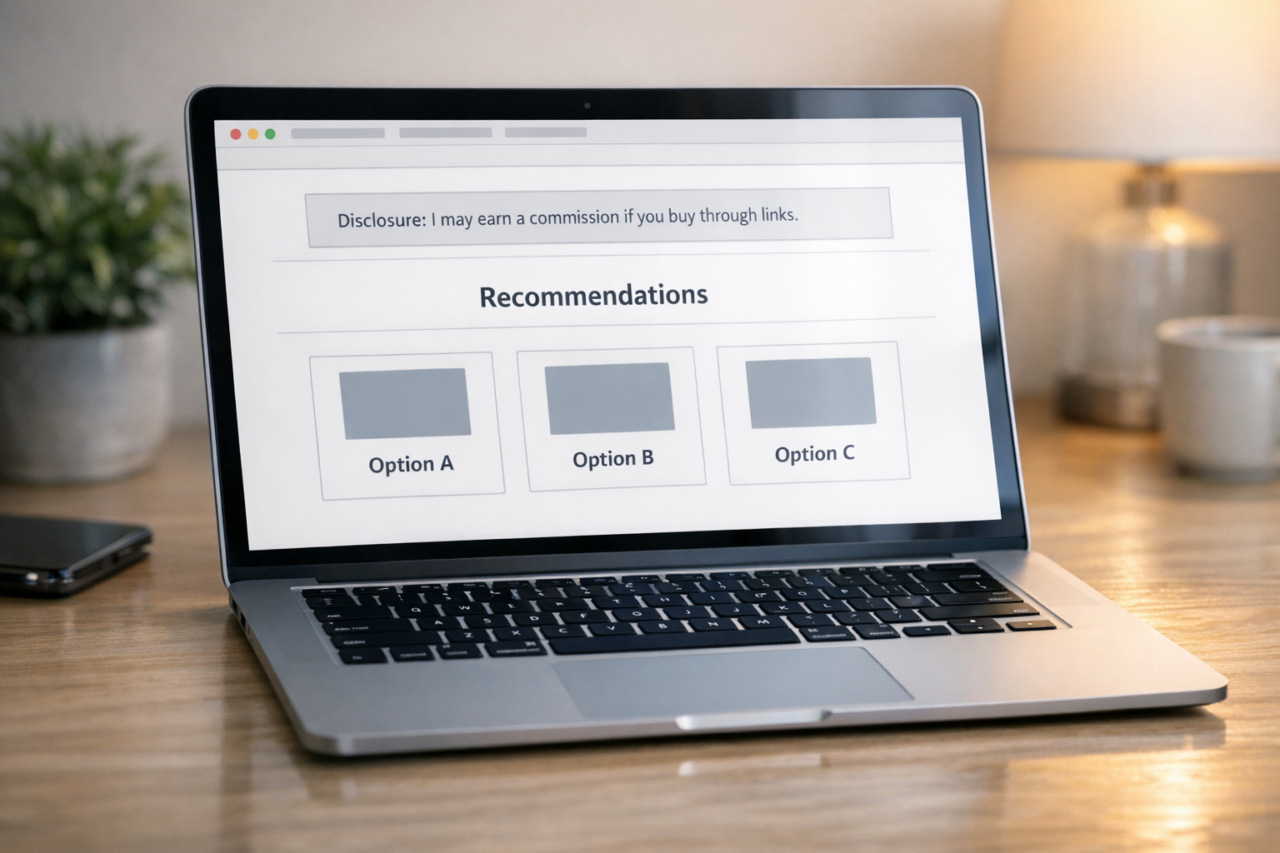
An affiliate disclosure is a clear statement that tells readers or viewers you may earn a commission if they buy through your link. It matters because it keeps your content honest, helps protect trust, and reduces the risk of misleading people.
Why disclosure matters beyond rules
A lot of people frame disclosure as a legal nuisance. That misses the point.
The deeper issue is respect. If you recommend something and stand to benefit when someone clicks or buys, that is relevant information. Most readers are not offended by that. What they dislike is feeling that the commercial angle was hidden.
A clear disclosure tells people where they stand. That is good for trust, and trust is one of the few things that actually compounds online.
If you are still working out your general approach to earning online, the Start Here guide gives the wider beginner picture.
What affiliate disclosure for beginners should actually do
Affiliate disclosure for beginners should do three things.
- It should be clear.
- It should be easy to notice.
- It should use normal language.
That is it.
You do not need clumsy legal wording. You do not need a paragraph full of formal language that nobody reads. In most cases, one short, plain-English sentence near the recommendation or link is more useful than hiding the information in a policy page.
What official guidance says
The FTC’s Endorsement Guides FAQ makes it clear that endorsements must be honest and that connections readers would not expect may need to be disclosed. In the UK, the ASA’s online affiliate marketing guidance explains that affiliate marketing is a form of performance-based marketing and that some affiliate-linked content can fall within advertising rules. GOV.UK guidance for content creators also warns that hidden ads and misleading practices can breach consumer protection law.
You do not need to become a legal expert to understand the basic principle. Hidden commercial intent is a bad habit.
What beginners often get wrong
The first mistake is hiding the disclosure somewhere nobody will notice.
The second is making it vague. If the wording leaves a normal reader unsure what you mean, it has failed.
The third mistake is assuming disclosure makes your recommendation weaker. It does not. A recommendation is weak because it is unconvincing, misleading, or badly reasoned. A clear disclosure usually makes it stronger because it shows you are not trying to slip something past people.
Why transparency supports trust
Sites in your niche do not win trust by sounding polished. They win trust by sounding honest.
A reader who senses pressure will step back. A reader who sees that you are open about how a link works is more likely to take the rest of your content seriously. That does not mean they will agree with you every time. It means the relationship starts on better ground.
That matters even more if your bigger aim is to build something steady over time, rather than make one flashy conversion and disappear.
What disclosure should not become
Disclosure is not a shield for bad recommendations.
You cannot fix a weak offer by saying, “I may earn a commission.” If the product is poor, the claim is exaggerated, or the recommendation is lazy, the disclosure does not solve that.
This is the part many people miss. Disclosure is one part of honesty, not the whole thing.
You still need to recommend carefully, avoid overclaiming, and say where something may not suit everyone.
A simple habit that helps
The easiest habit is to treat disclosure as part of the draft, not something you remember at the last minute.
If a post or page contains an affiliate link, your disclosure should be built into the content naturally. That keeps your process clean and makes honesty feel normal rather than awkward.
It also fits with the calmer, slower approach behind building a real site instead of rushing toward a shaky second income in your spare time.
Conclusion
So, affiliate disclosure for beginners is not just about rules. It is about clarity, respect, and trust. Readers should not need detective skills to work out whether a recommendation is commercial.
Done properly, disclosure does not weaken your content. It makes your standards clearer. That matters more than sounding slick.
FAQ
What is affiliate disclosure for beginners?
It is a simple statement that tells readers or viewers you may earn a commission if they use an affiliate link. The goal is to be clear, not clever.
Where should an affiliate disclosure go?
It should go where people will actually see it, usually near the relevant recommendation or link rather than buried elsewhere on the page.
Does disclosure make people less likely to click?
Not necessarily. Many readers are comfortable with affiliate links when the relationship is explained clearly and the recommendation still feels honest.
About the Author

Richard Chambers writes Simple Income Guide to help beginners understand online income in a clear, realistic, and pressure-free way. The focus is on simple explanations, honest expectations, and practical guidance for people who want to make sense of online business models without hype.
Read more on the About page.